

Most vendors in the hotel mapping space do not publish their pricing. You fill out a form, wait for a sales call, and receive a quote that may or may not reflect what a comparable company paid.
This makes comparison shopping genuinely difficult. And it creates information asymmetry that favors the vendor.
If you are evaluating hotel mapping API pricing, here is an honest breakdown of what the market looks like, what the different models actually mean for your budget, and what one transparent benchmark looks like.
Why Pricing Is Hard to Research
Hotel mapping is a B2B product sold to travel businesses with significant variation in needs: a startup OTA aggregating five suppliers has very different requirements than a bed bank processing tens of millions of property records monthly.
Most vendors use this complexity as justification for quote-based pricing. There is some logic to it. But it also means that published pricing benchmarks are rare, and buyers are left with anecdote and negotiation rather than structured comparison.
The result: many travel platforms are paying more than they need to, locked into legacy pricing from a negotiation they did not fully understand. Others delay solving their mapping problem because the procurement process feels too opaque to begin.
Neither outcome serves the buyer.
What You Are Actually Paying For
Before comparing price points, it helps to understand what a hotel mapping API actually delivers. The cost you pay should map to the value you receive in these specific areas.
Property matching and deduplication. The core function: identifying when two supplier records refer to the same physical property and consolidating them under a single identifier. The accuracy of this matching is the single most important variable. Higher accuracy means fewer duplicate listings, fewer pricing errors, and fewer guest complaints.
Supplier coverage. The number of suppliers already in the mapping system’s network. More coverage means faster onboarding when you add a new supplier. If your next three supplier integrations are already in the network, you avoid custom mapping work entirely.
Update frequency. How often the system re-processes supplier data. Hotel data changes constantly: new properties open, names change, amenities are updated, supplier codes are revised. A system that updates daily or multiple times daily keeps your platform current. One that runs weekly batches leaves gaps.
Delivery mechanism. How the mapped data reaches your systems. API delivery is the most flexible and allows real-time lookups. Offline file delivery suits platforms that do batch processing. Some platforms need both.
Room-level mapping. Property deduplication handles the first layer. Room mapping adds a second layer, standardizing room types across suppliers so travelers can compare room categories reliably.
Self-service portal and support. Can your team inspect mapping status, view sync history, and flag issues without raising a support ticket? This operational visibility has real labor cost implications.
Common Pricing Models Explained
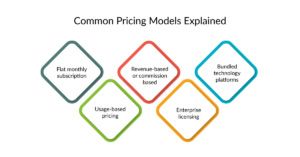
Hotel mapping vendors use several different pricing structures. Each has implications for how costs scale with your business.
Flat monthly subscription. A fixed monthly fee regardless of API call volume or number of properties. Predictable, easy to budget. The most buyer-friendly model for growing platforms because costs do not spike with usage.
Usage-based pricing. Charged per API call, per property mapped, or per supplier connected. Can be economical at low volumes, but costs become unpredictable as inventory scales. An unexpected traffic spike or a large supplier integration can create a billing surprise.
Revenue-based or commission-based. A percentage of bookings generated through the platform. Common in content distribution models. Creates alignment between vendor and client performance, but means your mapping cost rises proportionally with your success.
Enterprise licensing. A negotiated annual contract with volume commitments. Typical for very large platforms. Offers cost predictability and service guarantees, but requires multi-year commitment and procurement overhead.
Bundled technology platforms. Some vendors include mapping within a broader travel technology stack (booking engine, CRM, channel manager). Bundling reduces integration complexity but can be difficult to unbundle if you only need the mapping layer.
For most growing travel businesses, a flat monthly subscription with transparent pricing is the most practical model. It allows cost forecasting, eliminates usage-based variability, and removes the negotiation overhead of enterprise licensing.
Red Flags in Hotel Mapping Pricing
A few patterns in vendor pricing should prompt closer scrutiny.
No publicly listed pricing. Not automatically a problem, but it means every conversation starts with information asymmetry. Ask what your pricing is based on and request a breakdown.
Per-call or per-property fees without caps. These can scale unpredictably. Get a worst-case scenario calculation before signing.
Separate fees for supplier additions. Some vendors charge each time you add a new supplier to your mapping scope. If you plan to grow your supplier network, this adds up quickly.
Forced bundling. If you need only hotel mapping but are required to purchase a broader platform, you are paying for functionality you do not need.
No SLA on mapping accuracy. Accuracy is the core value of any mapping product. A vendor that does not commit to a specific accuracy rate or update frequency in their contract is not standing behind their core promise.
Also Read: How to Evaluate Hotel Mapping Software Features
How Vervotech’s Pricing Compares
Vervotech is one of the few hotel mapping vendors that publishes pricing directly on their website.
The base hotel mapping module starts at $399 per month. This includes:
- Vervotech Hotel IDs and supplier code mapping
- Both offline and API delivery
- Unlimited sync (no per-call or per-update fees)
- Access to their supplier network of 600 or more connected sources
Room mapping, which adds room-level deduplication and standardization, starts at $449 per month. Additional modules (content enrichment, DualMap, post-booking validation) are priced at $199 per month each.
Compared to most alternatives in this space, $399 per month for property mapping with unlimited sync is a concrete, published anchor. GIATA, Gimmonix, and most enterprise mapping vendors do not publish equivalent pricing, which makes direct comparison difficult but also suggests a different pricing tier.
For context: a platform that relies on manual deduplication, with one or two operations staff spending significant time on data cleanup, may be spending more on labor than the cost of an automated solution. The cost of poor mapping, in booking errors, guest complaints, and duplicate listings, rarely gets calculated as a line item, but it is real.
Read more: Vervotech Pricing
Building the Business Case

When you are making the case internally for hotel mapping API investment, the most useful framing is cost replacement, not new spend.
Labor cost. How many hours per week does your team spend on data quality issues, manual deduplication, and supplier onboarding support? Multiply by loaded hourly cost.
Booking loss from duplicates. Estimate the percentage of searches affected by duplicate listings. Even a conservative 1-2% booking abandonment rate attributable to cluttered results, across your annual booking volume, produces a number that dwarfs most mapping software costs.
Supplier onboarding delays. If new supplier integrations take two to three weeks instead of 24 hours, how many bookings does that gap represent per integration?
Post-booking complaint cost. What does a guest complaint caused by incorrect hotel data cost in support time and potential refunds? Accurate mapping prevents most of these.
When these costs are added up honestly, the $399 to $600 per month range of a well-built mapping API is typically a fraction of the total cost of the problem it solves.
Conclusão
Hotel mapping API pricing ranges from opaque enterprise contracts to transparent monthly subscriptions. The right model depends on your volume, your growth stage, and your tolerance for pricing variability.
What matters most is not finding the cheapest option, but finding the option with the right accuracy, coverage, and update frequency for your specific supplier set. A cheaper tool that maps at 95% accuracy will cost you more in errors than a well-priced tool at 99.999%.
If you are starting to evaluate options, Vervotech’s public pricing at $399 per month gives you a concrete benchmark to pressure-test alternatives against.
FAQs
How much does hotel mapping API pricing typically cost?
Hotel mapping API pricing varies significantly by vendor and model. Most enterprise vendors do not publish pricing. Vervotech, one of the few transparent vendors, starts at $399 per month for hotel property mapping, which includes unlimited sync and both API and offline delivery.
What is the difference between per-call pricing and flat monthly pricing for hotel mapping APIs?
Per-call pricing charges based on the volume of API requests made. This can be economical at low usage but becomes unpredictable as inventory scales. Flat monthly pricing is a fixed fee regardless of volume, which makes budgeting simpler for growing platforms.
Why do most hotel mapping vendors not publish pricing?
Enterprise B2B pricing is often negotiated based on volume, contract length, and feature set, which makes published pricing difficult. However, opaque pricing also creates information asymmetry that can disadvantage buyers who do not know market rates.
Is hotel mapping API pricing based on the number of suppliers?
It depends on the vendor. Some charge per supplier connection, which means costs grow as you add suppliers. Vervotech’s model includes access to 600 or more connected suppliers within the monthly fee, with no additional charge per supplier.
What should be included in a hotel mapping API subscription?
A solid subscription should include: property matching and deduplication, supplier code mapping, both API and offline delivery options, unlimited sync or a high call limit, and a self-service portal for visibility. Watch for any of these being charged separately as add-ons.
Is there a free trial available for hotel mapping APIs?
Some vendors offer free trials or proof-of-concept periods. Vervotech offers a free trial option on their pricing page, allowing platforms to test the mapping quality before committing to a subscription.
Related Vervotech resources
- Hotel mapping API technical reference: The technical detail behind how mapping actually gets delivered at scale.
- Hotel supplier comparison: Which suppliers we map today, grouped by type and inventory tier.