
How HeyTrip Strengthened Global Hotel Distribution with Vervotech’s Hotel Mapping

Heytrip is a China-based B2B bedbank serving more than 20,000 clients worldwide. At that scale, hotel mapping is not a back-office function; it is the foundation on which every booking, every partner relationship, and every revenue decision is built. Heytrip had already invested in in-house mapping and third-party providers. But as their supplier network and distribution channels expanded globally, they needed a partner with deeper specialization and broader industry reach. This case study explores why Heytrip chose Vervotech, and what changed when they did. Enter your email to read the case study! Challenges our client faced: Mapping accuracy limitations in existing in-house setup Growing complexity of supplier & distribution at global scale Inconsistent hotel attributes across multiple supplier feeds Risk of duplicate listings degrading booking experience Significant internal costs incurred by manual mapping process Value delivered by Vervotech 10+ new suppliers successfully onboarded through our platform 5+ new distribution channels activated with clean, verified hotel data Significantly improved mapping accuracy for key channels Reduction in internal manual efforts and operational resource spends Stronger partner credibility via industry-recognized mapping Download this case study to find out: Why Heytrip chose to partner with Vervotech despite already having an in-house mapping team. How peer recommendations from within Heytrip’s own partner network influenced the decision. The specific improvements in mapping accuracy and supplier onboarding Heytrip experienced. How Vervotech helped Heytrip free up internal resources to focus on core business growth. Why Heytrip views Vervotech as a long-term data infrastructure partner, not just a vendor.
Rate Parity Is Another Untapped Opportunity

When a rate parity alert fires, the instinct is to open the pricing console. Somewhere a rate is out of position, and someone on the revenue team needs to find it and fix it. The assumption is that a rate parity violation is a pricing event. That assumption is wrong more often than most distribution teams realize. A significant portion of what hotel rate shopping tools flag as parity violations are not pricing decisions at all. They are mapping errors. The wrong room type has been matched to the wrong rate plan, or the wrong property ID has been resolved to the right property name, or a rate plan designed for a specific channel has been mapped to a broader inventory pool. The price is not out of line. The map is. This matters because pricing teams and data teams fix things differently. If you are routing a mapping problem to a pricing team, the fix will not hold. What Rate Parity Monitoring Actually Sees Rate shopping tools compare prices for what they believe is the same room at the same property across different distribution channels. The word “believe” is doing real work in that sentence. The comparison depends on the tool’s ability to identify that Channel A’s “Superior Double, City View” and Channel B’s “Standard Room, Double Bed” are the same physical room. If the tool is matching on name similarity or broad property ID resolution, it will sometimes compare rooms that are not equivalent. When a non-equivalent comparison produces a price difference, the tool flags a violation. The revenue team investigates. They check the rates. The rates are correct for the room type being sold. Nobody finds a violation because there is no pricing violation. There is a mapping error in the monitoring tool itself. Three Scenarios Where Mapping Errors Create False Parity Alerts Scenario 1: Room-type mismatch at the attribute level A hotel sells two room types that share the same base category: Standard Double. One includes a breakfast voucher. One does not. Both are loaded into different supplier feeds under category names that are close enough for a fuzzy matching system to treat as equivalent. The rate for the room without breakfast is $160. For the room with breakfast is $185. Hence, the rate shopping tool flags a $25 parity violation. The revenue team investigates and finds no pricing error. The rates are correct. The tool compared two different products. Scenario 2: Rate-plan leakage across channels A non-refundable rate of $145 is loaded for a specific wholesale channel with contractual restrictions on redistribution. A mapping system without rate-plan awareness resolves the property ID and loads the wholesale rate into the retail inventory pool. The rate shopping tool sees the wholesale rate appearing in a retail channel at $145 against the standard retail non-refundable at $162. The alert fires. The pricing team cannot explain the $17 difference because no one on the pricing team loaded a $145 rate to that channel. The source is a rate-plan mapping error that pulled the restricted wholesale rate into a retail context. Scenario 3: Property-level false positive Two adjacent properties in a city center, from the same hotel group, share a brand name with different suffixes. A mapping system running on name-matching logic treats them as the same property. Rates from both properties are pooled under a single property record. The rate shopping tool sees a single property selling at two different price points simultaneously. The violation is real in the data but not real in the commercial sense. The property is not violating parity. The mapping system has merged two different hotels. Also Read: Hotel Mapping API Pricing: What Nobody Tells You Where Hotel Rate Shopping Tools Fail Without Clean Mapping Rate shopping tools are only as reliable as the room and property mapping that underlies them. The tools themselves often do not own that mapping layer. They rely on the mapping supplied by the distribution platform or the OTA’s internal matching system. If that mapping is off at the room level, the rate comparison is off at the room level. The tool reports faithfully on what it sees. What it sees is a function of what was mapped to what. This is why teams that invest in rate shopping tools without simultaneously auditing their room-level mapping often spend significant analyst time chasing violations that are not there. The alert queue grows, the team grows to manage the queue, and the root problem stays fixed in the data layer. The more productive frame: treat every unexplained rate parity alert as a hypothesis about a mapping error first, a pricing error second. The Rate-Plan Mapping Layer That Most Systems Skip Property mapping is now a solved problem for most mature distribution platforms. The harder layer is rate-plan mapping. A single property may have 20 to 50 active rate plans at any given time: advance purchase, non-refundable, flexible, promotional, corporate, wholesale, channel-specific, and seasonal. Each rate plan has an intended channel of distribution and a contractual context that defines where it can appear. When mapping systems resolve property IDs without tracking rate-plan context, restricted rates travel to unintended channels. The result looks like a pricing decision. It is a data routing error. Rate-plan-aware mapping tracks not only which property and room type a rate belongs to, but which channel context the rate is valid for. When a restricted rate appears in an unintended context, the system flags it as a mapping routing error, not a pricing violation. Also Read: The Margin Multiplier Stack: Mapping and Rebooking How This Reframe Changes the Fix If you accept that a significant share of parity alerts are mapping errors, the operational response changes. Instead of routing all alerts to the revenue team for rate investigation, you route a triage layer to the data team first. The triage question is simple: are the two rates being compared actually for the same room type, under the same rate plan context, in the same channel tier? If
#9: Erik Akhmetgaliev, Regional Director APAC, RateHawk
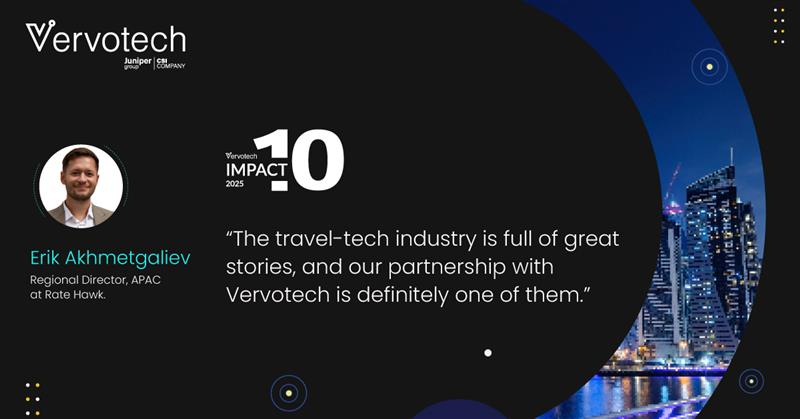
For the ninth edition of our Impact10 series, we hosted a conversation with Erik Akhmetgaliev, the Regional Director, APAC Region at RateHawk. With over 13 years of experience in the travel industry, Erik talked about the influence of technology in the travel space, foreseeable opportunities and shortcomings for the companies navigating their growth journey, along with his insights on the APAC region. Here are more details on this enriching interaction: Firstly, being in the industry with one of the leading travel-tech organisations, could you please share what first drew you to the travel-tech space, and how your journey has evolved over the years? I have been in this industry for over 13 years, so for over a decade. And what initially drew me to travel tech is that it is a global and dynamic industry, where you can see directly the impact of your work across different markets and cultures. I joined RateHawk in 2016, and it was my second job. I started my career at a traditional travel agency. And interestingly, later, this company became one of our first clients. That early experience gave me a very sudden transition to travel tech with a more commercial mindset. Over the years, my journey has evolved significantly. I started in operations, then I moved to sales, building my commercial expertise. From there, I transitioned into launching new markets, leading market research, competitor analysis, hiring local teams on the ground and establishing partnerships with key clients across Europe, Latin America, the US, and finally, I came to Asia, where I built a team of over 50 people within one year. We’ve been focusing on localization since then. Since that time, we have been identifying the critical gaps in product processes and partnerships to ensure sustainable growth. And this led me to my current role of Regional Director APAC, where I focused on scaling markets and shaping the high-performing team. And overall, I am responsible for driving the expansion. Given that you’ve worked very extensively in this APAC region, how has this market shaped your perspective on the travel tech industry? Well, over the past decade, one of the most significant shifts in travel distribution has been the rapid digitalization of the industry. We’ve seen a clear move from the traditional offline bookings to online platforms and API integrations. And this transformation has enabled travel agents and the clients to assess real-time availability, dynamic pricing and a broader range of products all in one place. And additionally, the rise of personalization driven by data analytics and AI have been prominent. Everyone is now talking about AI, and this is definitely a game-changer. What all this means is that travellers are increasingly expecting tailored-made recommendations and more flexible options. Overall, these changes have made the industry more efficient, responsive, and customer-centric than ever before. Have you felt any other major shifts that have happened in the industry or are likely to happen? I assume that in the near future the demand will be more focused on domestic travel, especially after the COVID times. In each region, we’ve observed that domestic travel is increasing, and I believe that will continue happening. As RateHawk, managing such a large accommodation inventory must be really complex. What were some of the biggest challenges that companies face at that scale? Well, it’s a very good question and I think one of the biggest challenges is caused by the high level of data fragmentation across the industry. The global accommodation ecosystem includes countless hotels, third-party suppliers and consolidators, many of whom operate on different platforms and technologies. And there is no unified industry-wide protocol for data change, making integration and communication between systems pretty difficult and resource-intensive. As a result, matching rates and ensuring real-time accuracy becomes a significant challenge. Overcoming these issues typically requires building internal tools, leveraging advanced data normalization techniques, and maintaining flexible integrations to adapt quickly to the diverse landscape of partners and suppliers. Operating RateHawk, Roundtrip, and Zen Hotels, consolidates over 3.2 million accommodation options from more than 350 suppliers across the globe, including over 100 DMCs and 250,000 direct contracts. And thanks to the access to such an extensive inventory, RateHawk is highly valued in the market, so it’s one of our USPs. And it is valued not just as a booking platform, but also as a leading API supplier for global travel tech players. Currently, we are expanding, especially in Asia, since Asia is a very API driven market, and we have over 1,500 API partners overall across the globe, including major OTAs and travel tech platforms from the APAC region, enabling them to grow their business and avoid the hustle of supply consolidation. So, partners can quickly and easily plug into the Red Hawks API, empowered by in-house advanced technologies and partnerships, including, of course, you guys. We really value our partnership with Vervotech Mapping Solution. How do inconsistencies in hotel and room data affect business performance and customer experience at the end of the value chain? Well, it surely affects significantly as the hotel content is often the first touch point which shapes the expectations and establishes credibility before a booking is made. Up-to-date and consistent data is especially crucial and critical in the B2B segment, where travel professionals and travel tech businesses rely on and entrust us with their own reputation and service quality. That’s why we invest a lot in ensuring our customers feel confident in the accuracy of every booking, whether made through our platform, through the back office or through API. Of course, issues happen, but the most important thing is how fast we can solve them. Looking ahead, what would be some advice that you would give to the travel companies that are currently trying to scale while keeping their inventory clean and reliable? You can’t just rely on yourself. I mean, the value of reliable partnerships can be overestimated and overstated. I would strongly advise delegating the complex supply consolidation tasks to those travel tech companies that have already done the heavy lifting instead of trying to do everything on your own. Even with our deep tech expertise and strong development capabilities, we continue to invest in