



Hotel bookings are visible. Data accuracy is invisible. But the invisible metrics are the ones that decide whether your platform scales smoothly or collapses under inconsistency. This is why in 2026, the difference between a growing B2B hotel booking platform and a struggling one will not be the number of suppliers it signs. It will be the quality of the data it manages behind the scenes.
Most hotel booking platforms already track common metrics like bookings and revenue. But these numbers only show the result, not the reason behind it. What often goes unseen is the data working behind the scenes. How accurate is your hotel data? How well are rooms matched across suppliers? How fast does new inventory go live? These behind-the-scenes numbers matter more than ever.
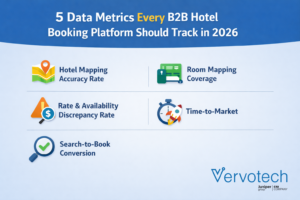
In this blog, we break down five data metrics every B2B hotel booking platform should track to improve accuracy, scale faster, and deliver a more reliable booking experience.
Let’s explore them in depth.
#1. Hotel Mapping Accuracy Rate
At the center of every hotel booking platform is one basic question. Are all suppliers talking about the same hotel or not? Hotel mapping accuracy tells you how well hotels from different suppliers are matched to a single, correct hotel record in your system. When this goes wrong, the impact is immediate. The same hotel appears multiple times in search results. Inventory gets split. Prices and availability look incomplete or misleading.
This is not a rare issue. As booking platforms scale, they integrate with more suppliers, each using their own hotel names, codes, and formats, creating discrepancies in their hotel data. Without strong hotel mapping technology, these differences pile up fast.
What you should track
- Percentage of supplier hotels correctly mapped to a single master hotel
- Number of unmapped hotels in your system
- Number of duplicate hotel records showing up in the search
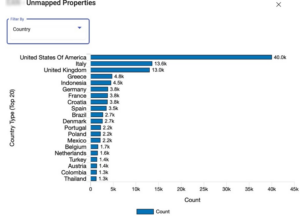
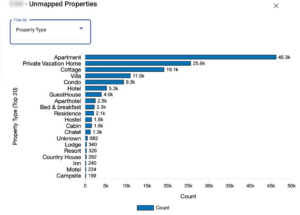
This is how Vervotech lets its users analyze & track hotel mapping metrics.
B2B hotel booking platforms are expected to handle large volumes of inventory with speed and accuracy. Buyers expect clean results they can trust. Even small mapping errors can lead to missed bookings or loss of confidence. A high hotel mapping accuracy rate means your hotel booking software is working on clean data. It improves search results, reduces confusion for buyers, and creates a stronger base for everything that follows, including room mapping and pricing accuracy.
Also Read: Building A Reliable B2B Hotel Booking Platform? Here’s What You Need In Your Data Stack
#2. Room Mapping Coverage & Match Confidence
Another important metric to track is the room mapping coverage.
Imagine this- a buyer searches for a hotel and sees five rooms that look almost the same. The names are slightly different. The inclusions are unclear. Prices vary just enough to raise doubt. Instead of booking, the buyer pauses or leaves.
This is what poor room mapping looks like in real life. When rooms are not properly matched across suppliers, comparison becomes hard. Buyers cannot tell whether they are looking at the same room or different ones. Over time, this confusion leads to lower conversions, more booking mistakes, and higher support effort.
Room mapping coverage rate shows how much of your room inventory is actually usable and comparable. The level of accuracy directly impacts other metrics like conversion rates, booking confidence, and post-booking disputes.
What you should track
- How many rooms are correctly matched across suppliers
- How many rooms remain unmapped or only partially mapped
- Rooms with conflicting names, occupancies, or inclusions
As platforms grow and connect to more suppliers, room data becomes more fragmented. In 2026, buyers will expect clear, side-by-side comparisons. Strong room mapping coverage helps your hotel booking platform remove friction, speed up decisions, and turn search traffic into confirmed bookings.
This is how Vervotech lets its users see the room mapping coverage
Also Read: From Confusion to Precision: The Impact of Room Mapping on Hotel Bookings
#3. Rate & Availability Discrepancy Rate
Nothing breaks trust faster than a price that changes at the last step. A buyer selects a room, moves to booking, and suddenly the rate is higher, or the room is no longer available. Even if this happens once, it affects how the platform is perceived.
Rate and availability issues usually come from deeper data problems. Mismatched rooms, delayed updates, or poor data alignment between suppliers can all cause inconsistencies. Tracking rate and availability consistency helps you understand how reliable your platform really is under real booking conditions.
What you should track
- How often do rates differ for the same room across suppliers
- Availability conflicts during search and booking
- Bookings affected by last-minute data changes
In 2026, B2B buyers will value reliability as much as inventory size. Platforms that consistently show correct prices and availability will stand out. Clean, well-structured data ensures your hotel booking software delivers predictable outcomes and fewer booking failures.
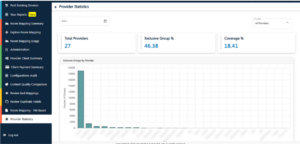
This is how Vervotech lets its users see the room mapping coverage
Also Read: From Confusion to Precision: The Impact of Room Mapping on Hotel Bookings
#4. Time-to-Market for New Supplier Inventory
Adding a new supplier should feel like growth. But for many platforms, it feels like work. Data arrives in different formats. Hotel names do not match. Rooms need manual checks. Inventory takes weeks or months to go live. During this time, revenue opportunities are already being lost. Supplier onboarding speed reflects how scalable your platform really is.
What you should track
- Time taken to bring a new supplier live
- Time spent on hotel and room mapping
- Delays between integration and searchable inventory
In 2026, B2B hotel booking platforms will expand faster than ever, into new regions and supplier networks. Platforms that cannot onboard quickly will struggle to keep up. Faster onboarding means faster revenue and less operational strain, especially when supported by strong mapping technology.
Also Read: How To Avoid Poor Reviews & Ensure 5-Star Reviews On Your Hotel Booking Platform
#5. Search-to-Book Conversion Impacted by Data Quality
Not every lost booking is about price or design. Sometimes buyers leave because the data makes them uncertain. Duplicate hotels appear. Room details are missing. Inclusions do not match. The platform gives them reasons to hesitate instead of reasons to book.
These drop-offs are easy to miss because they do not show up as errors. They quietly reduce conversion. Tracking data-related drop-offs helps you see where confusion replaces confidence.
What you should track
- Drop-offs after hotel or room selection
- Searches showing duplicate or overlapping listings
- Rooms with unclear or inconsistent information
Even small data issues can impact large volumes of traffic. Platforms that identify and fix these issues early see smoother booking journeys and higher conversions. Clean data is not just a backend improvement. It directly affects revenue.
In 2026, Your Infrastructure Metrics Will Define Growth Metrics
By 2026, B2B hotel booking platforms will not be judged only by how much inventory they offer, but by how reliable that inventory is. Clean hotel data, well-mapped rooms, consistent rates, fast supplier onboarding, and low data-driven drop-offs all point to the same thing. A platform that can scale without breaking trust.
These five metrics go beyond surface-level performance numbers. They reveal how strong your data foundation really is and how prepared your hotel booking software is for growth. Platforms that track and improve these metrics will spend less time fixing issues and more time expanding, converting, and retaining partners. In a market where complexity keeps increasing, data quality will not be a background concern. It will be a competitive advantage.
If your hotel booking platform works with multiple suppliers, Vervotech can help you track these metrics, ensure high data accuracy, and seamless hotel bookings.
Schedule a free demo to see how it works