


The global hotel booking market is projected to reach $1.3 trillion by 2030. Yet behind every booking sits a silent problem: the same hotel appearing under five different names, three different IDs, and two conflicting sets of amenities across your suppliers.
This is not a data housekeeping issue. It is a revenue issue.
Dynamic hotel mapping software exists to solve it. Not once, not on a schedule that runs quarterly, but continuously: syncing, deduplicating, and standardizing hotel data as it changes in the real world. Here is what that actually means, and why the “dynamic” part is what separates useful tools from ones that merely look useful.
What Is Dynamic Hotel Mapping Software?
Hotel mapping software takes hotel records from multiple suppliers and consolidates them into a single, unified listing. When a property appears on Expedia, Booking.com, Hotelbeds, and a bed bank simultaneously, each source may label it differently. Mapping software identifies that these records refer to the same physical property and merges them.
Dynamic mapping software does this continuously. Rather than running a batch process once a week or once a month, a dynamic system monitors incoming supplier data in near real-time and applies updates as they arrive.
The difference matters more than most travel businesses expect.
A hotel in Dubai renames its meeting room. A resort in Bali adds a new pool. A supplier updates their property ID. A static mapping system captures none of this until the next scheduled sync. A dynamic system flags and integrates these changes within hours, sometimes minutes.
Why Static Mapping Falls Short
Static or batch-based mapping was the industry default for years. It worked reasonably well when supplier data changed slowly and when travel platforms carried smaller inventories.
Neither condition applies today.
The hotel mapping services market reached USD 1.42 billion in 2024 and is growing at a CAGR of 13.7%. Inventories are larger. Supplier relationships are more complex. And the tolerance travelers have for inaccurate or duplicated listings has dropped sharply.
Consider what happens when mapping is not dynamic:
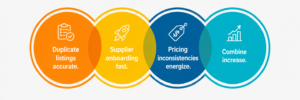
- Duplicate listings accumulate. The same property appears multiple times in search results with slightly different names, prices, and photos. Travelers get confused. Some abandon the search entirely.
- Pricing inconsistencies emerge. When hotel data is mapped incorrectly, rate comparisons break down. A traveler sees two listings for the same property at different prices and has no way to know they are identical.
- Supplier onboarding stalls. Adding a new supplier to your platform requires mapping their entire inventory. With static mapping, this process can take two to three weeks. That delay has a direct cost.
- Complaints increase. When a guest books a hotel based on displayed amenities that no longer exist, or checks in to find the room description was outdated, the booking experience fails at the final moment.
According to a Revinate and Hapi report, nearly 40% of hotel professionals cite disconnected systems as their single biggest operational obstacle. Dynamic mapping directly addresses this by keeping systems continuously aligned.
How Dynamic Mapping Works in Practice
A dynamic hotel mapping system operates across several layers simultaneously.
Data ingestion happens first. The system receives hotel feeds from all connected suppliers, normalizing incoming data into a consistent structure regardless of format.
Matching algorithms then compare incoming records against the existing master database. They evaluate property name, address, geolocation coordinates, phone number, imagery, and amenity lists to determine whether a new record represents a new property or an existing one under a different label.
Deduplication consolidates matched records into a single canonical listing. One property, one entry, regardless of how many supplier codes reference it.
Continuous sync means this process runs on an ongoing basis. When a supplier pushes an update, the system re-evaluates the affected records and propagates changes downstream.
The practical result is a platform where travelers always see accurate, current information, and where your team does not spend hours manually reconciling supplier data.
Key Features to Look For
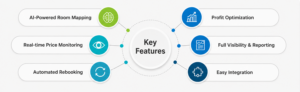
Not all tools marketed as “dynamic” deliver equivalent capability. When evaluating options, look for these specifics:
- Mapping frequency: How often does the system update? Look for multiple daily syncs, not weekly batch jobs.
- Accuracy rate: Industry benchmarks vary. Solutions with AI and machine learning backing can reach 99.999% accuracy. That number matters because even a small error rate across millions of properties creates thousands of bad listings.
- Supplier coverage: A mapping tool is only as useful as the suppliers it covers. Look for 400 or more connected suppliers.
- Deduplication capability: Can the system handle room-level as well as property-level deduplication?
- Self-service visibility: Can your team see mapping status, flag issues, and monitor sync history without raising a support ticket?
- API integration: Can the mapping layer integrate cleanly with your booking engine, content management system, and CRM?
Also Read: Hotel Mapping Accuracy vs. Coverage: What Matters More?
Who Needs It Most
Dynamic hotel mapping software is relevant across the travel distribution ecosystem, but some segments feel the gap more acutely.
Online travel agencies (OTAs) aggregate inventory from dozens of suppliers. Without dynamic mapping, their search results fill with duplicates, prices become unreliable, and the user experience degrades.
Bed banks and wholesalers handle enormous volumes of hotel content from global supplier networks. Stale mapping creates downstream errors that reach every distribution partner who sources from them.
Tour operators package hotel content alongside flights and transfers. Incorrect hotel data at the packaging stage causes booking failures and guest complaints.
Travel management companies (TMCs) need accurate property data to enforce travel policy compliance. A hotel mapped to the wrong chain or the wrong city puts a traveler out of policy without anyone knowing.
Each of these buyer types has different integration requirements, but they all share the same underlying need: hotel data that is accurate today, not accurate as of last Tuesday’s batch run.
How Vervotech Handles Dynamic Mapping
Vervotech’s hotel mapping platform is built on AI and machine learning algorithms that run continuously across a supplier network of 600 or more connected sources. The system delivers 99.999% mapping accuracy and updates multiple times daily, so changes in supplier content flow through to your platform without manual intervention.
The platform covers over two million hotels and one million apartments. Its self-service portal gives your team direct visibility into mapping status, sync history, and any flagged records, without waiting on support queues.
Pricing starts at $399 per month, which includes Vervotech Hotel IDs, supplier code mapping, offline and API delivery, and unlimited sync. For businesses that have historically viewed mapping as a large infrastructure project, that entry point changes the calculation considerably.
Read more: How Vervotech’s Hotel Mapping Works
Conclusion
Dynamic hotel mapping software is not a feature request. It is the operational baseline for any travel platform that aggregates inventory from multiple suppliers. The cost of static or infrequent mapping, in duplicate listings, pricing inconsistencies, and booking complaints, compounds quickly at scale.
The tools that solve this problem best combine high-accuracy AI matching with continuous sync and broad supplier coverage. When evaluating options, those three dimensions (accuracy, frequency, and coverage) are the ones that determine real-world performance.
If your current mapping setup is running on batch schedules, it may be worth examining what that gap costs you each month.
FAQs
Q: What is dynamic hotel mapping software?
A: Dynamic hotel mapping software is a system that continuously matches, deduplicates, and standardizes hotel property data from multiple suppliers. Unlike static tools that run periodic batch updates, dynamic systems sync changes in near real-time as supplier data evolves.
Q: Why do travel platforms need dynamic hotel mapping?
A: Travel platforms aggregate hotel data from many suppliers, each using different property names, IDs, and formats. Without dynamic mapping, the same hotel appears as multiple listings, prices conflict, and traveler-facing content becomes inaccurate. Dynamic mapping keeps inventory unified and current.
Q: How often does dynamic hotel mapping update?
A: The best dynamic mapping tools update multiple times per day. Some systems, including AI-powered platforms, can reflect supplier changes within hours of them occurring upstream.
Q: What is the difference between hotel mapping and room mapping?
A: Hotel mapping consolidates property-level records so the same hotel from multiple suppliers appears as one listing. Room mapping operates at the room type level, deduplicating and standardizing room categories across suppliers so travelers can compare like with like.
Q: How does AI improve hotel mapping accuracy?
A: AI and machine learning algorithms evaluate multiple data signals simultaneously, including name, address, geolocation, imagery, and amenity data, to determine whether two records refer to the same property. This multi-signal approach achieves accuracy levels that rule-based systems cannot reach.
Q: What should I look for when choosing dynamic hotel mapping software?
A: Look for mapping frequency (multiple daily updates), accuracy rate (target 99.9% or higher), supplier coverage (400 or more), deduplication at both property and room level, a self-service visibility portal, and clean API integration. Transparent pricing without usage-based fees is also a practical consideration.