
What Is Global Distribution System in Hotel Industry, Anyway?
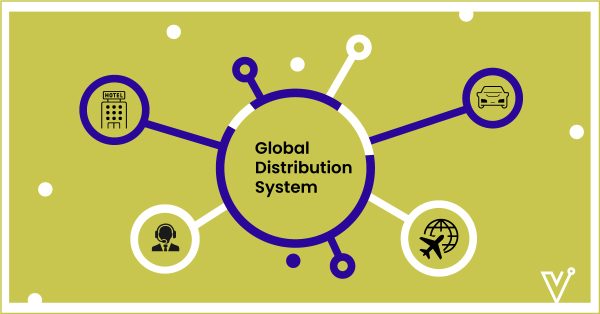
The idea of a global distribution system evolved from the highly cumbersome and inefficient booking system the travel industry was following. Until, 1960 if a travel agent had to make a reservation for a flight, he needed to call an airline, and airline staff would take hours to shuffle through documents and find if there was space available for a particular route and time. While the demand for air travel was growing, some airlines developed their own booking system. American Airlines was the first in the batch. The airline partnered with IBM and developed Automated Business Research Environment (SABRE) technology. The technology helped the airline widen its access to more travel agents, which ultimately translated into more customers. Soon enough, other lines also followed suit, the likes of British Airways and Delta also started using the electronic booking system. In 1970, The Westin became the first hotel to have an electronic reservation system called Westron. But the reservation system was not open for travel agents or agencies, and only hotel employees could use it. Then 1976 came as a watershed moment for the Global Distribution System in Hotel Industry when a travel agency got access to SABRE. By the end of 1985, about 10,000 travel agencies were using SABRE. Eventually, in 1992, an owner of America based reservation system joined hands with the European system to build the world’s first Global Distribution System. How does Global Distribution System in Hotel Industry Work? Global Distribution system works as an intermediary dealer between a travel agent and a hotel’s (or airline’s) online reservation system. A GDS does not have its own inventory, and it directly uses the hotel’s data to make changes. It allows travel agents to fetch real-time prices and inventory for a particular hotel. A Global Distribution System in Hotel Industry simply enables travel agents to look through the hotel’s system and gather important information like available room types, prices, and restrictions. Unlike the 60s, now, if a travel agent books a room, the GDS automatically removes the room from the hotel’s system. A travel agent no longer needs to check with hotel staff, and hotel staff no longer need to flip through documents to find if a room is available in their hotel. That’s the change GDS brought in the hotel reservation ecosystem. Today, Global Distribution System in Hotel Industry is widely used to tap the corporate customers. Also Read – What Are Hotel Groups, Hotel Chains, and Hotel Brands? The Benefits of Using Global Distribution System in the Hotel Industry The primary goal of the Global Distribution System in the Hotel Industry is to help travel agents/agencies find hotel rooms that fit their requirements. It’s a B2B system that travel companies use to get real-time availability of rooms and other travel arrangements and make it available for their customers planning to travel. As a hotel, if you are not getting enough traction from travellers, signing up with a GDS can be a great idea. Let’s understand in slightly greater detail how the Global Distribution System in the Hotel Industry can help your hotel business. Increased Bookings through Travel Agents Many corporates even today rely on travel agents to make accommodation arrangements for their employees, rather than having someone in-house who manages travel arrangements. More than 60,000 active travel agents use the global distribution system to make bookings. Thus, signing up the GDS offer hotels a wide net of recurring customers. An Opportunity to Lean Hotel Staff Apart from the exposure that hotels get, Global Distribution System in the Hotel Industry also makes booking easier. The system has real-time access to the hotel’s booking system, and it instantly informs the hotel once an agent books accommodation. It removes that entry from the hotel’s room inventory. So, it frees up a lot of hotel administrative staff, creating a positive-sum game for the hotels. A hotel can use this opportunity to lean their staff or deploy them to a place where they can create more value. Recommended: Top Hotel Mapping Tools Leading the Market in 2022 A Less Expensive Alternative to Marketing However, hotels have to pay a joining fee to set up an account with a hotel distribution system, but it’s much cheaper than what a hotel chain may have to pay for marketing to up their booking numbers. Also, as mentioned previously, with GDS, you get many corporate recurring customers. That’s an added advantage. From agents having to call the hotel staff to directly making bookings, things have dramatically changed ever since the emergence of the Global Distribution System in the Hotel Industry. The system continues to be relevant, offering information, value and profits to both agents and hotels.
Hotels & Vacation Rentals – Over the Ages

Since humans started settling in colonies and gradually shifted from a nomadic tribe to a farming one, there was a need for people to travel between these colonies for trade, art, culture and commerce. As civilizations grew widespread, so did the distances that needed to be traversed between major cities thus majorly affecting the time taken to travel. The hospitality industry as a sector started providing rest houses such as monasteries and abbeys to these weary travellers that were either controlled by the state and paid for by the people through taxes or religious groups that supported them through offerings. However, as volumes increased and in cases where the state was unable to fund these rest-houses, ownership was transferred to private entities. These rest-houses ranged from simple cottages to large multi-storied buildings complete with their bath and gardens. Some records show that the Romans even build mansions for travellers that were on the road for official government business. Seeing the lucrative business opportunities in the sector, several individual businessmen started renting out their summer homes and plots of land to vacationers for a little extra income on the side. Since travel relied heavily on the terrain and the weather, most routes were seasonal thus allowing these businessmen to enjoy their settlements at designated times of the year. As newer modes of transport were introduced, these summer-houses were gradually shifted to a perennial business thus giving birth to the very early concept of vacation rentals. It is important to understand that hospitality, as a business was already prevalent in major capitals of the world and hotels, were a widespread concept even during the early days of civilization, although they were known by different names over the ages. Therefore, these early models of ‘vacation rentals’ were generally owned by wealthy individuals who had access to land and could afford multiple living spaces thus giving them the liberty to rent out their living spaces to tourists. Since these vacation rentals were quite furnished, the owners would rent out these places at their discretion usually at a higher price when compared to hotels due to their added amenities. These spaces would generally be located at tourist spots where wealthy families spent their vacations and were able to afford such lavish services. So, the main differences between hotels and vacation rentals were quite distinguished even during the early days of civilization as they are today. While hotels were much more accessible to all types of travellers, vacation rentals were more or less targeted towards tourist minded individuals. It is also important to note that travel and tourism were considered more of luxury back in the day, reserved more or less for the upper classes. Therefore, tourists were mainly wealthy families while travellers on the other hand were the class of people that travelled for a purpose. Not much has changed today except for the fact that travel and tourism have become much more affordable and accessible thus making both vacation rentals and hotels a viable choice for tourists and travellers alike.Many studies suggest that the history of hotels is intricately linked to that of civilizations with the hospitality industry being moulded by purpose rather than profit. Being a core service industry, the sector needed to concentrate more on its quality of service rather than profit. This resulted in a rather stagnated rate of growth in the middle ages with innovations being made only when required. Inns were quite popular during this time in Europe and provided a much-needed place of rest for weary caravanners, one of the most widespread and uncomfortable modes of transport ever created. These inns had stables attached to them that made changing the horses and feeding them easier but resulted in a bad stench all over the place. With the number of travellers on the rise and no profits to support them, these inns became more and more crowded and hazardous to the travellers with sanitization levels at an all-time low. Some of the better-known inns during this time were the l’ Auberge des Trois Rois in Basle, l’ Auberge Cour Saint Georges in Gant and the Angel Inn from Grantham in Lincolnshire, England. A major shift in the industry was noticed when inns started offering additional services to travellers to build up profits. This led to the introduction of food, or more specifically, meals to the travellers where accommodation and food would be sold as a package in an attempt to make up for losses. Due to the rising hazards in these inns and inhospitable conditions offered by them, a law was introduced in the 15th century that required all hotels and inns to be registered with a license. This introduced various challenges in an industry that was previously unregulated and hotels and inns scrambled to ‘clean’ up their act to save their business. While the quality of service offered by these accommodation providers grew, so did the costs leading to a wide variety of types of ‘hotels’ depending on the service that they provided. Some were targeted towards wealthy individuals and provided a variety of services while others were more direct in their service. This was the birth of the wide classification of types of accommodation that we come across today. Hobby travellers also found their footing during this time with the first guidebooks for tourists being published in France in the 16th century. The 19th and the 20th century are generally considered as the golden age of travel and hospitality with hotels like the Le Grand Hôtel Paris and the Palmer House Hotel opening their doors for the first time to patrons. These hotels were known for their grandeur and luxury and were only accessible by the wealthy, usually familiar faces. In 1873, the Palais de Würtemberg in Vienna was transformed into the incredible l’Hôtel Impérial, a much-frequented place by kings and generals most well-known for its representation of the refined architecture of the Ringstrasse in Vienna. This trend of hotels trying to outmatch one another continued