
Why Bed Banks Can’t Afford to Ignore Hotel Mapping
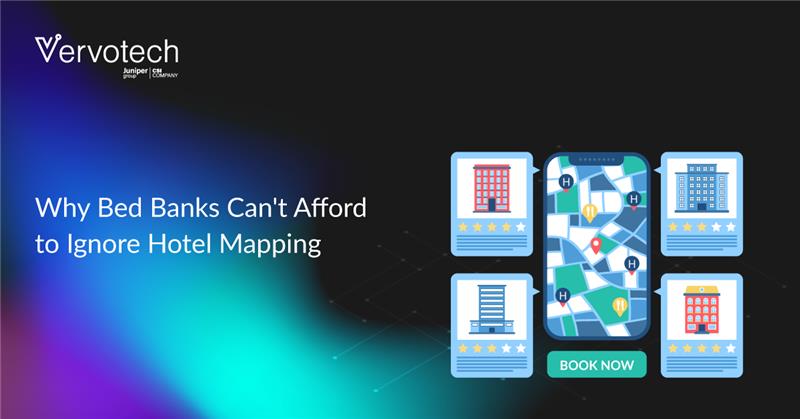
Hotelbeds distributes over 300,000 directly contracted properties. WebBeds lists more than 500,000. MTS Globe, Jumbo Tours, and dozens of other bed banks collectively route millions of room nights every year through a dense web of B2B channels. Behind every one of those bookings is a data matching problem that most people never think about. When your platform connects to even five or six bed bank suppliers, you are pulling hotel data from sources that do not agree on names, addresses, categories, or property codes. The result is duplicate listings, mismatched content, and confused travelers. This post explains what bed bank hotel mapping is, why it is difficult, and what a reliable solution looks like. What Is a Bed Bank and Why Does Hotel Mapping Matter A bed bank is a wholesale travel intermediary. It buys hotel inventory in bulk, typically at net rates, and resells that inventory through a network of OTAs, travel agents, tour operators, and travel management companies (TMCs). The key word is intermediary. Bed banks sit between the hotel and the end consumer, often passing data through several hands before it reaches a booking screen. Each hand in that chain can introduce inconsistency. A hotel might appear as “Grand Hyatt Dubai” in one system and “Hyatt Grand, DXB” in another. The same property might carry different codes, different room counts, or different star classifications depending on the source. Hotel mapping is the process that resolves this. It identifies that two or more listings across suppliers refer to the same physical property and assigns them a single, authoritative identity. For bed banks specifically, this matters for three reasons: Bed banks aggregate from dozens of suppliers simultaneously Their downstream clients (OTAs, travel agencies) rely on the accuracy of that aggregated data Any duplicate or mismatched listing flows downstream, multiplying the problem The Core Problem: Multiple Suppliers, Inconsistent Data Consider what happens when a mid-sized bed bank connects to 20 hotel suppliers. Each supplier maintains its own property database. Each uses different naming conventions, different geocodes, different room classifications. There is no global standard that forces them to agree. According to Vervotech’s research, a single hotel can appear up to 9 times on a booking platform when multi-supplier data is aggregated without mapping. That is not nine different hotels. That is nine records for the same property, each slightly different, each competing for the same search result. For a bed bank, this creates several compounding problems: Duplicate inventory display: Travelers see the same hotel listed multiple times at different prices, eroding trust in the platform Rate confusion: Different supplier rates for the same property appear as separate options, making price comparison meaningless Content conflicts: Room descriptions, photos, and amenity lists contradict each other across supplier feeds Downstream data degradation: Every OTA or travel agency connected to the bed bank inherits the same inconsistencies The problem is not static either. Hotels open, close, rebrand, and renovate. New suppliers are added. Existing suppliers update their feeds. Without continuous mapping, the data quality degrades over time. How Hotel Mapping Works for Bed Banks Hotel mapping is a matching process. The goal is to take hotel records from multiple sources and determine which ones represent the same property. Modern mapping systems use AI and machine learning to analyze multiple data attributes simultaneously: Property name (including variations, abbreviations, and alternative spellings) Geographic coordinates (latitude and longitude) Physical address Phone number and email Star rating and property category Image similarity No single attribute is sufficient on its own. An address can be formatted differently. A name can be abbreviated. Coordinates can be slightly off if the supplier geocoded the property manually. A well-designed mapping engine cross-references all available attributes and assigns a confidence score to each potential match. High-confidence matches are mapped automatically. Edge cases are flagged for review. For bed banks, the process needs to run continuously. New properties come online every day. Supplier feeds update frequently. A mapping solution that runs once a week is already working with stale data. Also Read: [How Hotel Mapping Works for OTAs] What Happens When Bed Bank Mapping Goes Wrong Poor mapping has direct commercial consequences. Let’s look at what actually breaks. Customer experience deteriorates. When a traveler searches for a hotel and sees it listed three times at three different prices, they do not know which one to book. Many abandon the platform entirely. Research from Expedia Group found that nearly 90% of UK travelers say property photos play a significant role in their booking decision. Duplicated, inconsistent images make that decision harder. Revenue leaks through the cracks. If the same hotel appears as three separate listings, your platform cannot accurately track availability, compare rates, or apply promotional pricing. You may be leaving money on the table on a property you already have under contract. Downstream clients lose confidence. An OTA or travel agency buying inventory from a bed bank expects clean, de-duplicated data. If they receive 9 records for the same hotel, they either deduplicate it themselves (at significant cost) or they accept the data quality hit and pass it to their customers. Support costs rise. Duplicate and inconsistent hotel content is one of the leading causes of post-booking complaints. When travelers arrive at a property that does not match the description they booked, they call support. That cost is real. Read more: [The True Cost of Duplicate Hotel Listings] Key Features to Look for in a Bed Bank Hotel Mapping Solution Not all mapping tools are equal. When evaluating a solution for bed bank use cases, look for: Breadth of supplier coverage: The tool should support your current supplier list and scale as you add new ones. Solutions covering 400 or more suppliers give you room to grow without switching tools. Continuous updates: Mapping is not a one-time activity. Look for solutions that update multiple times per day to reflect real-time changes in supplier inventory. API delivery: Your downstream clients need to access mapped data programmatically. A robust API with documented endpoints and uptime